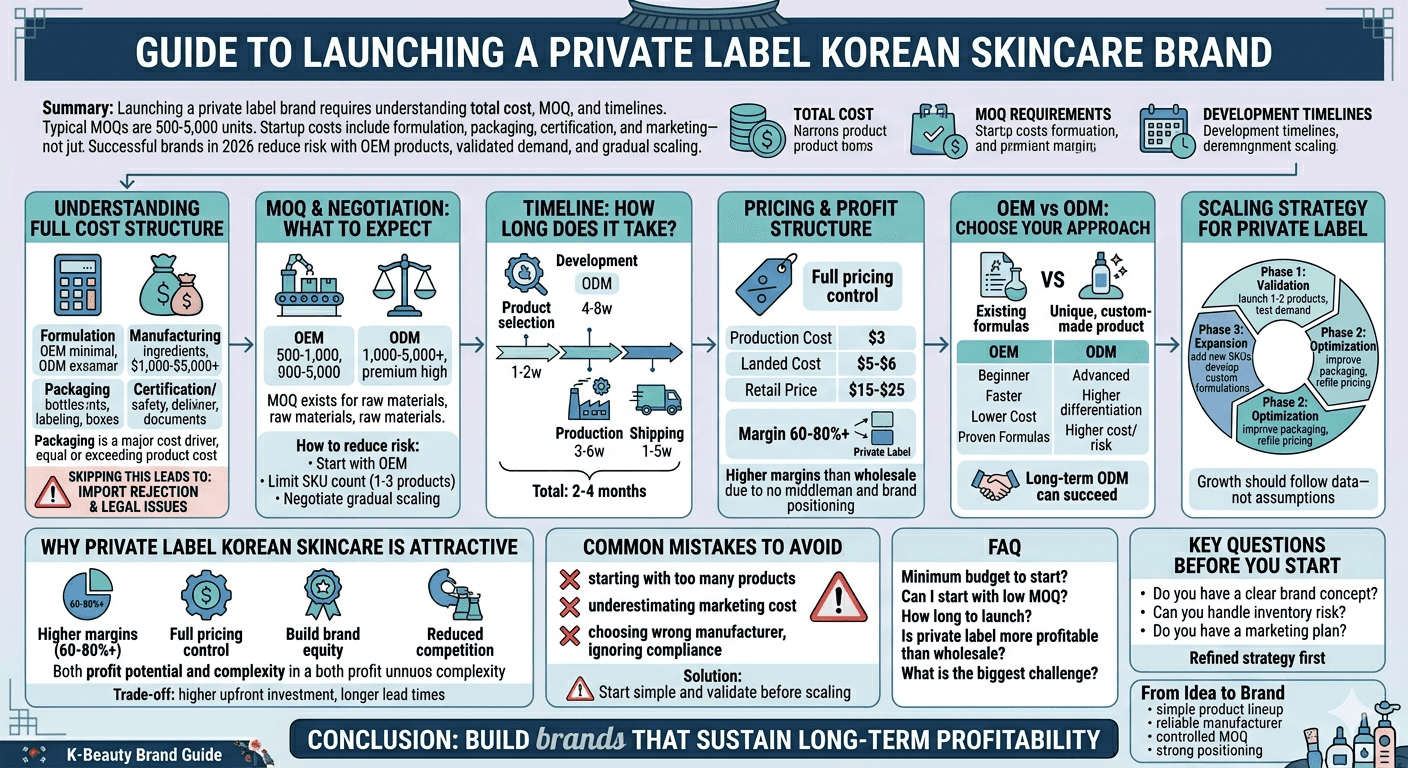
How to Start a Profitable Korean Cosmetics Distribution Business in 2026
How to Start a Profitable Korean Cosmetics Distribution Business in 2026
Brand Spotlight | VT Cosmetics wholesale, CICA skincare Korea
Brand Spotlight | VT Cosmetics wholesale, CICA skincare Korea
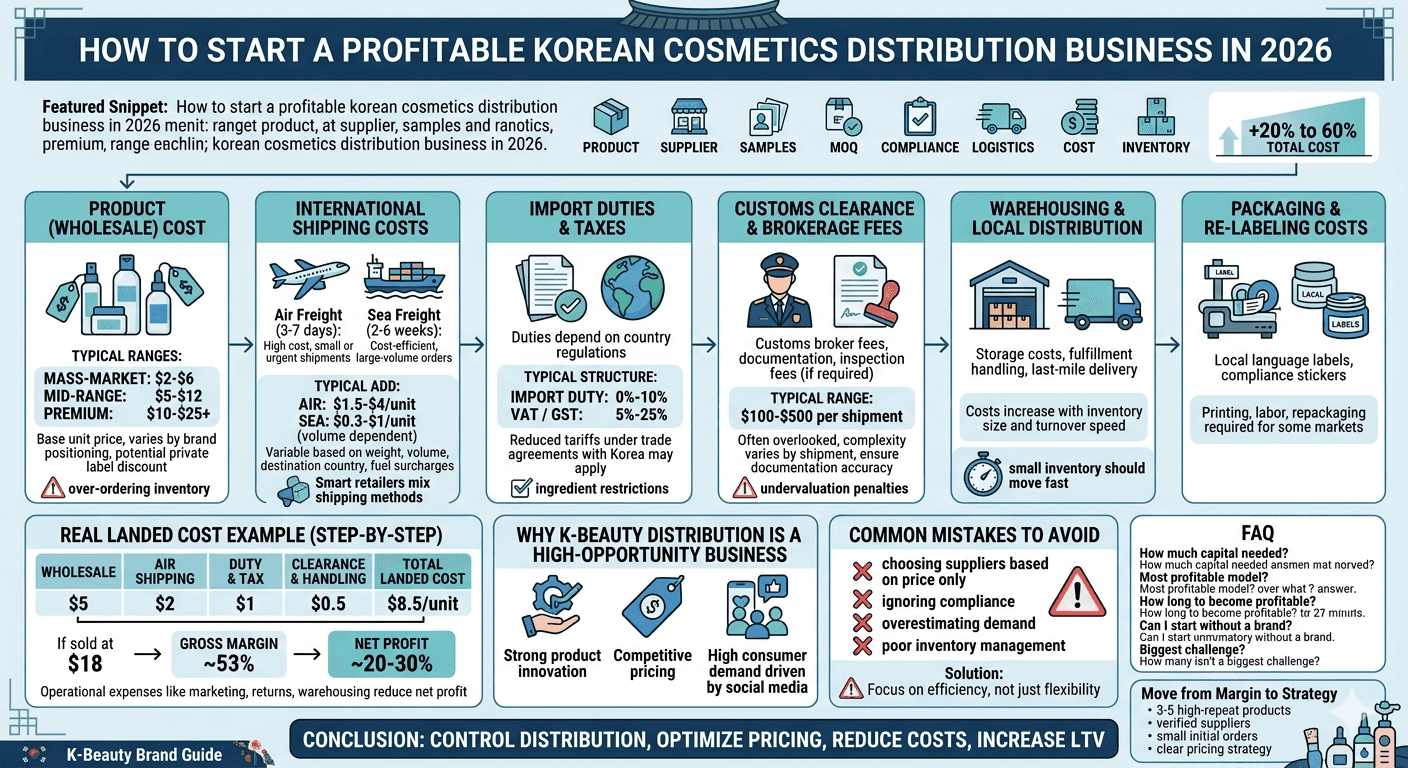
To start a profitable Korean cosmetics distribution business in 2026, you need a structured approach: choose the right distribution model (wholesale, exclusive, or private label), secure verified suppliers, optimize MOQ and pricing, ensure regulatory compliance, and build high-margin sales channels. The most successful distributors focus on inventory efficiency, strong supplier relationships, and customer lifetime value (LTV)—not just product sourcing.
Why K-Beauty Distribution Is a High-Opportunity Business in 2026
K-Beauty continues to expand globally due to:
strong product innovation
competitive pricing
high consumer demand driven by social media
But success is not guaranteed.
What separates profitable distributors from failed ones?
Question: Is it about finding the right products?
No.
It is about building a system:
supply chain control
pricing strategy
demand validation
operational discipline
👉 Insight
Distribution is a logistics and margin business—not just product sourcing
Step 1: Choose Your Distribution Model
Your business model defines your entire strategy.
1. Wholesale Distribution
buy and resell existing products
fast entry
lower risk
lower differentiation
2. Exclusive Distribution
rights to sell a brand in a region
higher control
reduced competition
3. Private Label
create your own brand
highest margin potential
highest complexity
Which model is best?
Question: What should beginners choose?
👉 Start with wholesale → scale to exclusive → transition to private label
Step 2: Identify Profitable Product Categories
Not all products generate consistent profit.
High-profit categories
cleansers
toners / essences
moisturizers
sunscreens
Why they work:
repeat purchase cycles
stable demand
lower trend volatility
Avoid early-stage mistakes
too many SKUs
trend-heavy products
high-priced niche items
👉 Insight
Start with predictable demand products
Step 3: Secure Reliable Korean Suppliers
Supplier quality determines business stability.
Where to find suppliers
manufacturers (OEM / ODM)
distributors
export companies
trade shows
Supplier verification checklist
business registration
export experience
product authenticity
references
Red flags
unclear pricing
inconsistent communication
lack of documentation
👉 Rule
Your supplier is your business foundation
Step 4: Optimize MOQ, Pricing, and Profit Structure
Understanding your margin
target margin: 50–70%
adjust based on channel and product type
Negotiation strategy
combine MOQ + pricing
present growth plan
negotiate payment terms
Key insight
Question: Why do many distributors fail despite high margins?
Because they ignore:
logistics cost
platform fees
inventory inefficiency
👉 Profit = margin – hidden costs
Step 5: Ensure Regulatory Compliance
Cosmetics are regulated products.
Key requirements
ingredient compliance
product registration
labeling standards
Risks of non-compliance
shipment rejection
legal penalties
brand damage
👉 Compliance must be handled before scaling.
Step 6: Build an Efficient Supply Chain
Your supply chain determines your scalability.
Core components
lead time management
logistics optimization
inventory control
Best practices
use hybrid shipping (air + sea)
maintain safety stock
forecast demand
👉 Insight
Speed and consistency drive revenue
Step 7: Choose the Right Sales Channels
Where you sell affects your margin.
Low-margin channels
marketplaces (Amazon, Shopee)
High-margin channels
direct-to-consumer website
social commerce
offline retail
👉 Strategy
Use marketplaces for volume, DTC for profit.
Step 8: Build a Strong Pricing Strategy
Pricing is where profit is protected.
Common mistake
competing on price → margin collapse
Better approach
maintain premium positioning
use bundles instead of discounts
build perceived value
👉 Insight
Control pricing to control profit
Step 9: Focus on Customer Lifetime Value (LTV)
The real profit is not from one sale.
Why LTV matters
K-Beauty is routine-based
customers buy repeatedly
higher total revenue per customer
How to increase LTV
sell skincare routines
offer subscriptions
create educational content
👉 Goal
Turn one-time buyers into repeat customers.
Step 10: Scale Strategically
Growth without structure leads to failure.
Scaling roadmap
validate product demand
increase order size
optimize logistics
expand product range
secure exclusive deals
Common scaling mistakes
over-ordering inventory
expanding too quickly
ignoring cash flow
👉 Insight
Scale based on data, not assumptions
Common Mistakes to Avoid
choosing suppliers based on price only
ignoring compliance
overestimating demand
poor inventory management
👉 These mistakes destroy profitability.
FAQ
Q1. How much capital is needed to start?
A. It varies, but starting with low MOQ and small inventory reduces risk.
Q2. What is the most profitable model?
A. A hybrid approach (wholesale → exclusive → private label).
Q3. How long does it take to become profitable?
A. Typically 3–6 months with proper execution.
Q4. Can I start without a brand?
A. Yes, wholesale distribution allows entry without branding.
Q5. What is the biggest challenge?
A. Managing supply chain and inventory efficiently.
Key Questions Before You Start
Before launching your business, ask:
Do you understand your full cost structure?
Do you have a reliable supplier?
Do you have a clear sales strategy?
If not, refine your plan before investing.
Turn Strategy Into Execution
Starting a profitable K-Beauty distribution business requires more than knowledge—it requires execution.
Begin with:
3–5 core products
verified suppliers
small initial orders
clear pricing strategy
Then scale based on real performance.
In 2026, the most successful distributors are not the ones who move the most products—
they are the ones who build efficient, scalable, and margin-driven systems.
To start a profitable Korean cosmetics distribution business in 2026, you need a structured approach: choose the right distribution model (wholesale, exclusive, or private label), secure verified suppliers, optimize MOQ and pricing, ensure regulatory compliance, and build high-margin sales channels. The most successful distributors focus on inventory efficiency, strong supplier relationships, and customer lifetime value (LTV)—not just product sourcing.
Why K-Beauty Distribution Is a High-Opportunity Business in 2026
K-Beauty continues to expand globally due to:
strong product innovation
competitive pricing
high consumer demand driven by social media
But success is not guaranteed.
What separates profitable distributors from failed ones?
Question: Is it about finding the right products?
No.
It is about building a system:
supply chain control
pricing strategy
demand validation
operational discipline
👉 Insight
Distribution is a logistics and margin business—not just product sourcing
Step 1: Choose Your Distribution Model
Your business model defines your entire strategy.
1. Wholesale Distribution
buy and resell existing products
fast entry
lower risk
lower differentiation
2. Exclusive Distribution
rights to sell a brand in a region
higher control
reduced competition
3. Private Label
create your own brand
highest margin potential
highest complexity
Which model is best?
Question: What should beginners choose?
👉 Start with wholesale → scale to exclusive → transition to private label
Step 2: Identify Profitable Product Categories
Not all products generate consistent profit.
High-profit categories
cleansers
toners / essences
moisturizers
sunscreens
Why they work:
repeat purchase cycles
stable demand
lower trend volatility
Avoid early-stage mistakes
too many SKUs
trend-heavy products
high-priced niche items
👉 Insight
Start with predictable demand products
Step 3: Secure Reliable Korean Suppliers
Supplier quality determines business stability.
Where to find suppliers
manufacturers (OEM / ODM)
distributors
export companies
trade shows
Supplier verification checklist
business registration
export experience
product authenticity
references
Red flags
unclear pricing
inconsistent communication
lack of documentation
👉 Rule
Your supplier is your business foundation
Step 4: Optimize MOQ, Pricing, and Profit Structure
Understanding your margin
target margin: 50–70%
adjust based on channel and product type
Negotiation strategy
combine MOQ + pricing
present growth plan
negotiate payment terms
Key insight
Question: Why do many distributors fail despite high margins?
Because they ignore:
logistics cost
platform fees
inventory inefficiency
👉 Profit = margin – hidden costs
Step 5: Ensure Regulatory Compliance
Cosmetics are regulated products.
Key requirements
ingredient compliance
product registration
labeling standards
Risks of non-compliance
shipment rejection
legal penalties
brand damage
👉 Compliance must be handled before scaling.
Step 6: Build an Efficient Supply Chain
Your supply chain determines your scalability.
Core components
lead time management
logistics optimization
inventory control
Best practices
use hybrid shipping (air + sea)
maintain safety stock
forecast demand
👉 Insight
Speed and consistency drive revenue
Step 7: Choose the Right Sales Channels
Where you sell affects your margin.
Low-margin channels
marketplaces (Amazon, Shopee)
High-margin channels
direct-to-consumer website
social commerce
offline retail
👉 Strategy
Use marketplaces for volume, DTC for profit.
Step 8: Build a Strong Pricing Strategy
Pricing is where profit is protected.
Common mistake
competing on price → margin collapse
Better approach
maintain premium positioning
use bundles instead of discounts
build perceived value
👉 Insight
Control pricing to control profit
Step 9: Focus on Customer Lifetime Value (LTV)
The real profit is not from one sale.
Why LTV matters
K-Beauty is routine-based
customers buy repeatedly
higher total revenue per customer
How to increase LTV
sell skincare routines
offer subscriptions
create educational content
👉 Goal
Turn one-time buyers into repeat customers.
Step 10: Scale Strategically
Growth without structure leads to failure.
Scaling roadmap
validate product demand
increase order size
optimize logistics
expand product range
secure exclusive deals
Common scaling mistakes
over-ordering inventory
expanding too quickly
ignoring cash flow
👉 Insight
Scale based on data, not assumptions
Common Mistakes to Avoid
choosing suppliers based on price only
ignoring compliance
overestimating demand
poor inventory management
👉 These mistakes destroy profitability.
FAQ
Q1. How much capital is needed to start?
A. It varies, but starting with low MOQ and small inventory reduces risk.
Q2. What is the most profitable model?
A. A hybrid approach (wholesale → exclusive → private label).
Q3. How long does it take to become profitable?
A. Typically 3–6 months with proper execution.
Q4. Can I start without a brand?
A. Yes, wholesale distribution allows entry without branding.
Q5. What is the biggest challenge?
A. Managing supply chain and inventory efficiently.
Key Questions Before You Start
Before launching your business, ask:
Do you understand your full cost structure?
Do you have a reliable supplier?
Do you have a clear sales strategy?
If not, refine your plan before investing.
Turn Strategy Into Execution
Starting a profitable K-Beauty distribution business requires more than knowledge—it requires execution.
Begin with:
3–5 core products
verified suppliers
small initial orders
clear pricing strategy
Then scale based on real performance.
In 2026, the most successful distributors are not the ones who move the most products—
they are the ones who build efficient, scalable, and margin-driven systems.